Welcome! This guide assists new and experienced users in maximizing their sewing machine’s potential. It’s designed for easy navigation and understanding of all features.
This manual provides essential instructions for operation, maintenance, and troubleshooting, ensuring a smooth and enjoyable sewing experience.
We aim to empower all sewing machine owners with the knowledge to create beautiful and lasting projects, regardless of skill level.
This resource is tailored for Singer models 257, Fashion Mate, and 99K, offering specific guidance for each machine’s unique capabilities.
Understanding the Purpose of the Manual
This manual serves as your comprehensive guide to unlocking the full potential of your sewing machine. It’s meticulously crafted to provide clear, concise instructions, ensuring both novice and seasoned sewists can operate their machine with confidence and achieve optimal results.
Beyond basic operation, this resource details essential maintenance procedures, safeguarding your investment and prolonging the lifespan of your machine. Understanding proper care – from cleaning to lubrication – is paramount for consistent performance.
Furthermore, the manual proactively addresses common issues, offering troubleshooting steps to resolve problems quickly and efficiently. It’s designed to empower you to independently diagnose and rectify minor malfunctions, minimizing downtime and maximizing productivity. This guide is specifically tailored for Singer 257, Fashion Mate, and 99K models, offering detailed insights into each machine’s unique features and functionalities.
Ultimately, this manual is your partner in creativity, enabling you to explore the boundless possibilities of sewing.
Safety Precautions
Prioritize safety when operating your sewing machine. Always disconnect the power supply before performing any maintenance, including needle replacement or internal cleaning. Keep fingers away from the needle area during operation to prevent accidental punctures.
Never force the fabric under the needle; allow the machine to feed the material naturally. Use the correct needle type and size for your fabric to avoid breakage and potential injury. Ensure the machine is stable and placed on a level surface before use.
Keep the machine out of reach of children and those unfamiliar with its operation. Avoid using the machine if the power cord is damaged. Regularly inspect all parts for wear and tear, replacing them as needed. Always refer to this manual for specific safety guidelines related to your Singer 257, Fashion Mate, or 99K model.
Following these precautions will ensure a safe and enjoyable sewing experience.
Machine Components & Identification
Familiarize yourself with your machine! This section details key exterior and interior parts, including the bobbin winding system, for optimal use.
Understanding each component is crucial for setup, operation, and maintenance of your Singer 257/Fashion Mate/99K.
Identifying Key Parts – Exterior
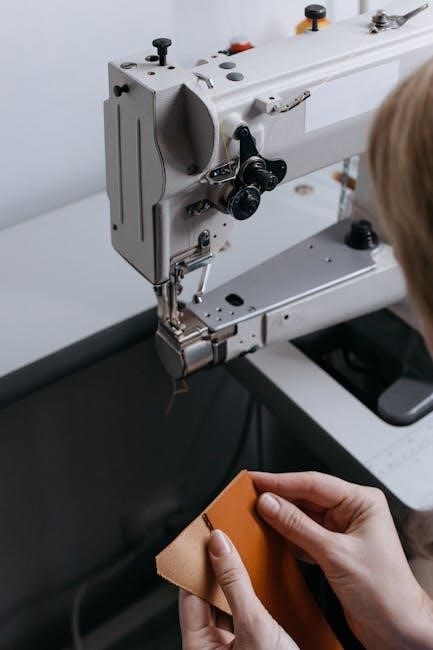
Let’s explore the outside of your sewing machine! The handwheel controls stitch formation, while the power switch initiates operation. Locate the stitch selector dial to choose desired stitch patterns – straight, zigzag, and more.
The stitch length dial adjusts the length of each stitch, and the stitch width dial controls the width, particularly for zigzag stitches. The presser foot lever raises and lowers the presser foot, essential for fabric handling.
Observe the bobbin winder, used for preparing bobbins, and the thread tension dial, which regulates thread tightness. The reverse lever allows for backstitching, securing seams. Finally, identify the spool pin, holding the thread spool securely during sewing.
Proper identification of these exterior components is vital for efficient machine operation.
Identifying Key Parts – Interior
Now, let’s look inside your sewing machine! The bobbin case holds the lower thread, crucial for stitch formation. Above it sits the feed dogs, which advance the fabric under the needle with each stitch.
The needle clamp securely holds the sewing needle, and the needle plate provides a smooth surface for fabric movement; Locate the shuttle hook, which interlocks with the upper thread to create a stitch.
The tension discs control the flow of thread to the needle, impacting stitch quality. Understand the take-up lever, which pulls thread from the spool and forms a loop around the shuttle hook. Finally, observe the timing belt or gears, synchronizing machine movements.
Familiarity with these internal parts aids in troubleshooting and maintenance.
Bobbin Winding System
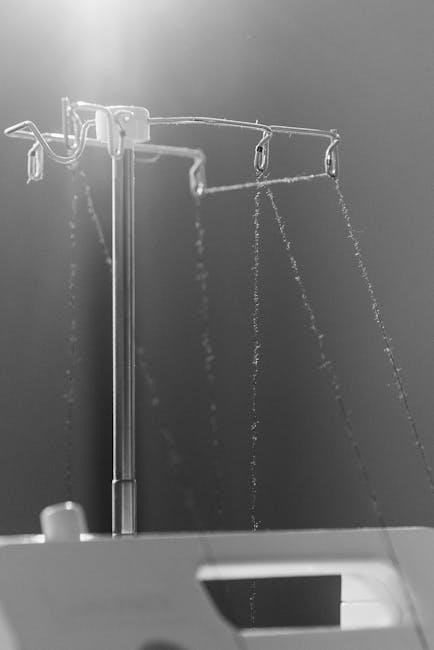
Properly wound bobbins are essential for consistent stitching! Begin by placing the thread spool on the spool pin. Guide the thread through the thread guide, then onto the bobbin. Secure the bobbin onto the bobbin winder spindle.
Engage the bobbin winder by sliding it into position – typically to the right. Apply gentle pressure on the thread tail to start winding. Most machines have an automatic stop when the bobbin is full.
Important: Ensure even winding to avoid thread bunching. Disengage the bobbin winder and remove the full bobbin. Always use the correct bobbin type for your machine to prevent damage and ensure optimal performance.
Practice makes perfect – mastering this skill is key!
Setting Up Your Sewing Machine
Preparation is key! This section details the initial steps for successful sewing: threading, bobbin insertion, and tension adjustment for optimal results.
Follow these instructions carefully to ensure your machine is correctly prepared for any project you undertake.
Threading the Machine
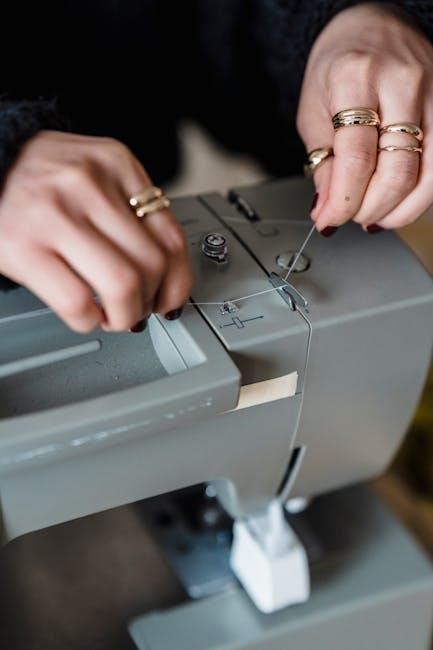
Proper threading is crucial for consistent stitch formation. Begin by raising the presser foot; this opens the tension discs, allowing the thread to seat correctly.
Guide the thread from the spool pin, through the first thread guide, and then down to the tension assembly. Ensure the thread snaps firmly into the tension discs – a clicking sound confirms proper engagement.
Next, continue threading through the take-up lever, ensuring it’s in its highest position. Then, lead the thread down through the remaining thread guides and finally, through the needle eye, from front to back.
Always use the correct type of thread for your fabric and needle size. A properly threaded machine minimizes tension issues and ensures smooth, reliable sewing.
Inserting the Bobbin
Correct bobbin insertion is vital for a balanced stitch. First, disengage the bobbin winder by pushing it to the left. Place the bobbin onto the bobbin winder spindle, ensuring it clicks into place.
Wind the bobbin with thread, following the winding path indicated on the machine. Once full, disengage the bobbin winder and remove the bobbin.
Now, open the bobbin case cover. Depending on your model (257, Fashion Mate, 99K), the bobbin insertion method varies – consult diagrams in the manual. Insert the bobbin, ensuring the thread unwinds in the correct direction.
Finally, guide the thread through the tension spring of the bobbin case and close the cover. A properly inserted bobbin ensures even thread distribution and prevents nesting.
Adjusting Thread Tension
Proper thread tension is crucial for achieving high-quality stitches. Incorrect tension leads to looping, puckering, or thread breakage. Begin with the tension dial set to its default position, typically marked ‘4’ or ‘5’.
Test the tension by sewing a sample seam on a scrap fabric. If the bobbin thread pulls to the top, loosen the upper tension (lower the number). Conversely, if the upper thread pulls to the bottom, tighten the upper tension (increase the number).
Make small adjustments – a quarter turn at a time – and retest after each change. Different fabrics require different tension settings; heavier fabrics generally need tighter tension.
For models like the Singer 257, Fashion Mate, and 99K, refer to the specific tension guide in your manual for optimal settings.
Basic Sewing Techniques
Mastering fundamental stitches unlocks a world of sewing possibilities. This section covers straight and zigzag stitching, alongside adjusting stitch length and width.
These techniques form the foundation for all sewing projects, from simple repairs to complex garment construction.
Straight Stitching
The cornerstone of sewing, the straight stitch is utilized for seams, topstitching, and basting. Begin by selecting the straight stitch setting on your machine, typically indicated by a straight line symbol.
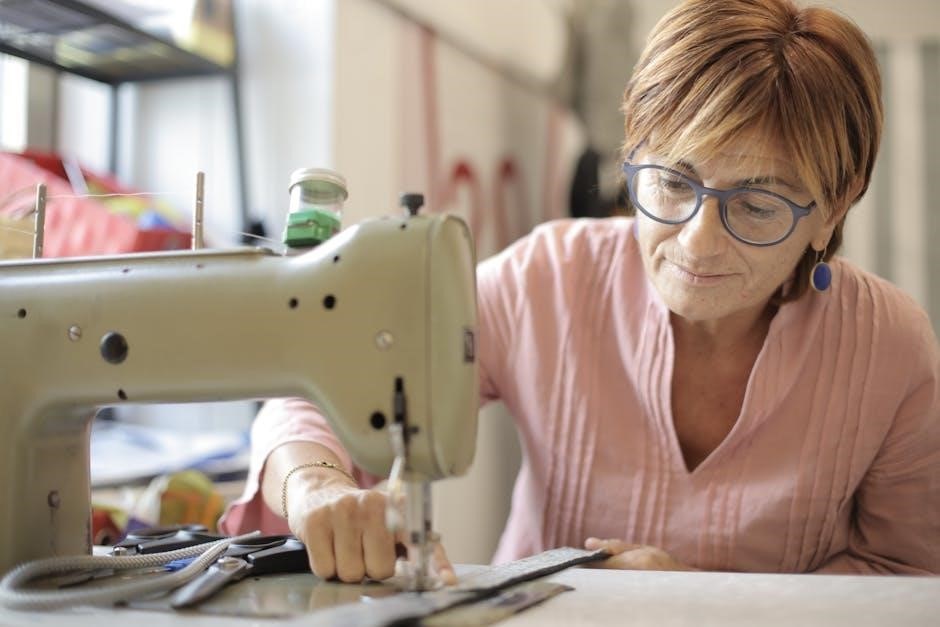
Ensure your fabric is positioned correctly under the presser foot, aligning the desired seam allowance with the guide on the needle plate. Gently lower the presser foot and begin sewing at a consistent speed.
Maintain a steady hand and guide the fabric, avoiding pulling or pushing it. Backstitch at the beginning and end of the seam to secure the stitches. Practice on scrap fabric to achieve even, consistent lines.
Adjust stitch length based on fabric weight; shorter stitches for delicate fabrics, longer for heavier materials. Proper tension is crucial for a balanced, durable straight stitch.
Zigzag Stitching
The versatile zigzag stitch is ideal for finishing raw edges, creating decorative effects, and sewing stretch fabrics. Select the zigzag stitch setting on your machine, identified by a zigzag line symbol. Adjust the stitch width and length using the corresponding dials.
A narrower width creates a denser stitch, while a wider width offers more flexibility. For edge finishing, use a medium width and length. When sewing knits, a slightly longer stitch length prevents puckering.
Practice on scrap fabric to determine the optimal settings for your material. Ensure consistent fabric guidance for uniform zigzag lines.
Zigzag stitches can also be used for appliqué and decorative embellishments, offering endless creative possibilities.
Adjusting Stitch Length and Width
Precise stitch control is crucial for quality sewing. Stitch length determines the distance between stitches, impacting fabric strength and appearance. Longer stitches are suitable for heavier fabrics and basting, while shorter stitches are ideal for delicate materials and fine details.
Stitch width controls the breadth of the stitch, particularly important for zigzag and decorative stitches. Wider widths create bolder patterns, while narrower widths offer subtle effects.
Locate the stitch length and width dials on your machine. Experiment with different settings on scrap fabric to achieve the desired result.
Refer to your stitch guide for recommended settings based on fabric type and sewing application.
Advanced Sewing Techniques
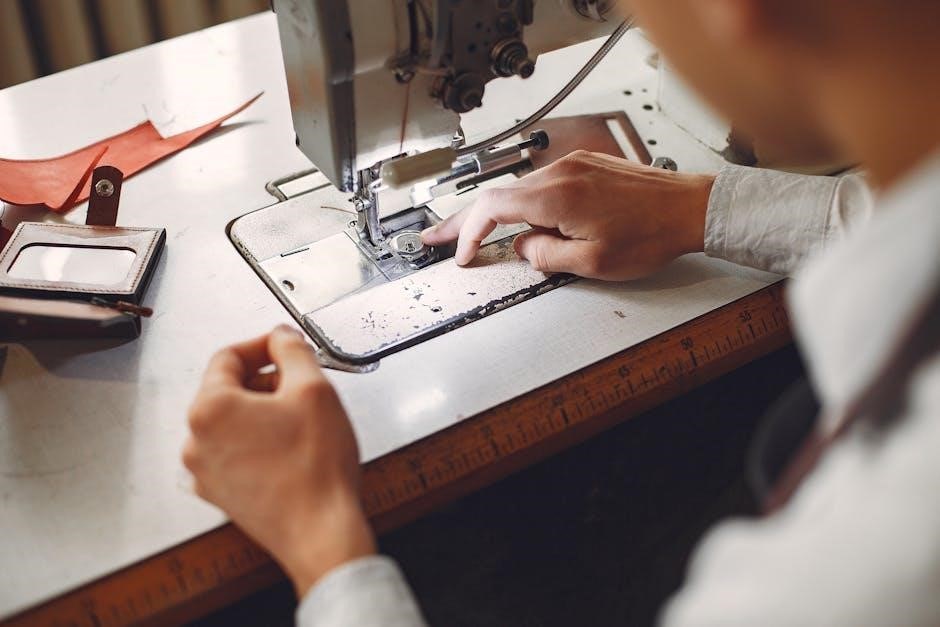
Expand your skills! This section explores techniques like buttonholes, zipper insertion, and overcasting, elevating your sewing projects to a professional level.
Mastering these skills unlocks creative possibilities and allows for more complex garment construction and embellishments.
Buttonhole Sewing
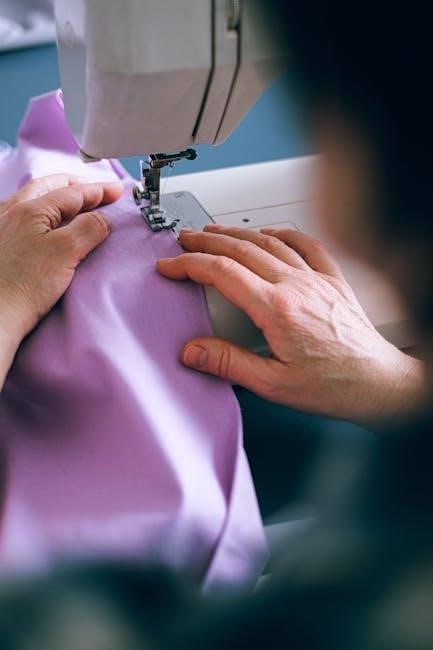
Creating professional buttonholes requires understanding your machine’s specific settings and capabilities. Begin by attaching the buttonhole foot, designed for precise stitching around buttons.
Select the appropriate buttonhole stitch on your machine – often indicated by a specific symbol. Most machines offer adjustable buttonhole sizes; choose one slightly smaller than your button for best results.
Carefully position your fabric and lower the presser foot. Begin sewing slowly, allowing the machine to complete the buttonhole sequence automatically. Some models require manual steering at corners.
Once finished, carefully cut open the buttonhole using the designated buttonhole opener or small, sharp scissors, avoiding damage to the stitching. Practice on scrap fabric to perfect your technique before working on your final project.
Refer to your machine’s manual for detailed instructions specific to your model.
Zipper Insertion
Inserting a zipper can seem daunting, but with practice, it becomes a straightforward process. Begin by selecting a zipper foot – it allows stitching close to the zipper teeth. Position the zipper face down along the fabric edge, aligning the zipper tape.
Using a straight stitch, sew close to the zipper teeth, ensuring consistent alignment. Backstitch at the beginning and end to secure the zipper in place. Repeat on the other side of the zipper.
For centered zippers, carefully open the zipper and fold the fabric edges towards the zipper tape, then stitch along the folded edges.
Practice on scrap fabric to master the technique before tackling your project. A slow, steady pace and careful alignment are key to a professional finish.
Consult your machine’s manual for specific zipper foot options and recommended stitch settings.
Overcasting Stitches
Overcasting stitches prevent fabric edges from fraying, creating a neat and professional finish; These stitches wrap the fabric edge, encasing the raw seam allowance. Your machine likely offers several overcasting options, including zigzag and overlock-style stitches.
Select an overcasting stitch and adjust the stitch width to fully cover the fabric edge. Test on scrap fabric to ensure the stitch adequately encloses the raw edge without puckering.
Guide the fabric edge under the presser foot, allowing the stitch to wrap around the edge as you sew. Maintain a consistent speed for a uniform overcast finish.
Overcasting is ideal for lightweight to medium-weight fabrics. For heavier fabrics, consider a wider stitch or a dedicated serger machine.
Refer to your manual for specific overcasting stitch settings and foot recommendations.
Troubleshooting Common Issues
Facing problems? This section provides solutions for frequent issues like thread breakage, skipped stitches, and needle failures, ensuring smooth operation.
We’ll guide you through diagnosing and resolving these challenges, keeping your sewing projects on track and frustration-free.
Thread Breakage
Frequent thread breakage can be frustrating, but often has a simple solution. First, ensure you’re using the correct thread type and size for your fabric weight. Incorrect threading is a common culprit – re-thread the machine, carefully following the manual’s diagram, paying attention to all guides and tension discs.
Check the needle; a bent or damaged needle can cause breaks. Also, verify the needle size is appropriate for the thread and fabric. Improper tension settings are another frequent cause; adjust the upper thread tension dial incrementally. Finally, ensure the bobbin is wound evenly and inserted correctly, as uneven winding or incorrect placement can lead to breakage during sewing.
Consistent issues may indicate a need for machine cleaning or professional servicing.
Skipped Stitches
Skipped stitches often indicate a timing issue or a problem with the needle and thread path. Begin by ensuring the needle is correctly inserted – it should be fully pushed up into the needle clamp. Verify you’re using the correct needle type and size for your fabric; a dull or damaged needle is a common cause.
Re-thread the machine completely, checking that the thread is properly seated in all tension discs and guides. Adjust the upper thread tension slightly; sometimes a minor adjustment can resolve the issue. Ensure the bobbin is wound evenly and inserted correctly. If problems persist, a professional machine servicing may be required to check the timing and internal mechanisms.
Always test on scrap fabric before starting your project.
Needle Breakage
Frequent needle breakage is a sign of significant stress on the needle, often stemming from incorrect setup or forceful fabric manipulation. First, confirm you’re using the appropriate needle type and size for the fabric weight. Attempting to sew through overly thick material with a fine needle will likely cause it to snap.
Ensure the needle is fully and correctly inserted into the needle clamp. Avoid pulling or pushing the fabric while sewing; let the machine feed the material naturally. Check for bent or damaged needles before each use. If breakage continues, verify the timing of your machine is accurate, as improper timing can cause collisions.
Always replace a broken needle immediately.
Maintenance & Care
Regular maintenance ensures optimal performance and longevity of your sewing machine. Consistent cleaning and lubrication are vital for smooth operation and preventing issues.
Proper care extends the life of your machine, guaranteeing years of reliable service and enjoyable sewing experiences.
Cleaning Your Sewing Machine
Regular cleaning is crucial for maintaining your sewing machine’s performance and preventing malfunctions. Always disconnect the power supply before beginning any cleaning procedure. Use a soft brush or lint remover to gently remove dust and lint from the bobbin area, feed dogs, and surrounding components.
For more thorough cleaning, a small vacuum cleaner with a brush attachment can be used to remove debris from hard-to-reach areas. Avoid using compressed air, as it can push dust further into the machine. Wipe down the exterior surfaces with a slightly damp cloth. Never use water or solvents directly on the machine’s internal parts. Pay special attention to the needle plate and surrounding areas, as thread and fabric fibers tend to accumulate there. Consistent cleaning will ensure smooth operation and extend the life of your sewing machine.
Lubrication
Proper lubrication is essential for the smooth operation of your sewing machine, reducing friction and preventing wear. Consult your machine’s specific manual for recommended lubrication points and oil types – using the wrong oil can cause damage. Typically, lubrication is required for the motor, gears, and moving parts within the machine.
Apply a small drop of sewing machine oil to each designated point, avoiding over-lubrication, which can attract dust and lint. After oiling, run the machine briefly to distribute the oil evenly. Avoid lubricating the bobbin area or tension discs. Regular lubrication, performed as recommended in your manual, will help maintain optimal performance and extend the lifespan of your sewing machine.
Replacing the Needle
A dull or damaged needle can cause skipped stitches, thread breakage, and fabric damage. Regularly inspect your needle for bends, burrs, or wear. To replace the needle, always power off and unplug your sewing machine. Loosen the needle clamp screw and carefully remove the old needle.
Insert a new needle with the flat side facing the back of the machine. Ensure the needle is fully inserted and securely tightened by the clamp screw. Use the correct needle type and size for your fabric – a universal needle works for many fabrics, but specialized needles are available for knits, denim, and leather.
Specific Model Information (Singer 257/Fashion Mate/99K)
This section details the unique features and operational nuances of the Singer 257, Fashion Mate, and classic 99K sewing machines for optimal use.
Unique Features of Singer 257
The Singer 257, a robust and reliable machine, boasts a fully rotary hook system, contributing to its smooth and consistent stitch quality. This design minimizes vibration and allows for higher sewing speeds compared to oscillating hook models.
Notably, the 257 features a built-in motor that delivers ample power for a variety of fabrics, from lightweight cottons to heavier denim. Its straightforward controls and durable construction make it ideal for both beginners and experienced sewists.
Furthermore, the machine’s compact size and portability enhance its versatility, allowing for easy storage and transport. The Singer 257 is celebrated for its ability to handle zigzag stitching effectively, offering creative possibilities for decorative sewing and seam finishing.
Its simplicity is a key strength.
Specific Instructions for Fashion Mate Models
Fashion Mate models often include a wider range of decorative stitches than the standard Singer 257, expanding creative sewing options. Refer to the stitch chart included with your specific Fashion Mate variant to identify each stitch’s purpose and settings.
These models frequently feature adjustable stitch length and width controls, allowing for customization based on fabric type and desired aesthetic. Ensure proper tension adjustment when utilizing decorative stitches to prevent puckering or looping.
Pay close attention to the bobbin winding instructions, as Fashion Mate machines may have slight variations in the winding mechanism. Regularly cleaning the bobbin area is crucial for optimal performance. Always use appropriate needles for the fabric being sewn.
Enjoy your creative journey!
Details for Singer 99K Operation
The Singer 99K, a classic machine, requires a slightly different threading approach compared to newer models. Carefully follow the diagram in your manual, ensuring the thread passes through all guides correctly for smooth operation.
This model utilizes a unique oscillating shuttle system; familiarize yourself with its movement before beginning a project. Proper bobbin insertion is vital – the bobbin should rotate freely.
Regular oiling of key components, particularly the shuttle hook and moving parts, is essential for maintaining the 99K’s longevity. Use a sewing machine oil specifically designed for this purpose.
Enjoy the timeless quality of your Singer 99K!