Ultrabond ECO 373: A Comprehensive Installation Guide
Ultrabond ECO 373 is a super aggressive, pressure-sensitive adhesive, ideal for diverse resilient flooring. This guide details installation, ensuring optimal performance and longevity of your flooring project.
Ultrabond ECO 373 represents a significant advancement in resilient flooring adhesive technology. This universal, pressure-sensitive, multi-flooring adhesive is engineered for superior performance across a broad spectrum of flooring materials, including luxury vinyl tile (LVT), luxury vinyl plank (LVP), and various vinyl sheet options.
Formulated with advanced eco-friendly technology, ECO 373 delivers a super aggressive initial tack combined with an extended working time – up to 12 hours – providing installers with enhanced flexibility and control. Its acrylic latex polymer base contributes to excellent adhesion and durability. This adhesive is designed to simplify installation processes while ensuring a robust, long-lasting bond.
This comprehensive guide will walk you through each step of the installation process, from substrate preparation to post-installation maintenance, ensuring a successful and beautiful flooring outcome. Always refer to the Safety Data Sheet (SDS) for detailed safety precautions before use.
Key Features and Benefits
Ultrabond ECO 373 boasts several key features that make it a preferred choice for flooring professionals. Its super aggressive, pressure-sensitive formula ensures immediate grab and minimizes movement during installation. The extended working time – up to 12 hours – significantly enhances installation flexibility, particularly on larger projects or complex layouts.
The adhesive’s versatility is a major benefit, accommodating a wide range of resilient flooring types, reducing the need for multiple adhesive products. With a solids content of 54-60% and low VOC content (under 10 g/L), ECO 373 contributes to a healthier indoor environment.
Furthermore, its fast-drying properties accelerate project completion times. Roller application is suitable for carpet tile and vinyl sheet, offering efficient coverage. ECO 373 provides a durable, long-lasting bond, minimizing the risk of flooring failure and ensuring customer satisfaction.
Product Overview: Universal Pressure-Sensitive Adhesive
Ultrabond ECO 373 is a universal, pressure-sensitive adhesive formulated with advanced eco-friendly technology. This acrylic latex-based adhesive is designed for installing a broad spectrum of resilient flooring, simplifying inventory and offering versatility on job sites. It’s a multi-flooring solution, eliminating the need for specialized adhesives for different materials.
The adhesive delivers a fast-drying, aggressive tack, ensuring immediate bonding and minimizing flooring movement. Its unique formulation provides an extended open time, allowing for greater installation flexibility and accommodating variations in substrate conditions.
Available in 50 lb containers, ECO 373 is a key component of Mapei’s Floor Covering Installation Systems. Detailed product information, including the Safety Data Sheet (SDS), is readily accessible on Mapei’s website, ensuring installers have the resources needed for a successful and safe application.
Preparing for Installation
Proper substrate preparation and moisture testing are crucial for successful Ultrabond ECO 373 application. Ensure flooring materials are acclimated to the installation environment beforehand.
Substrate Requirements & Preparation
Ultrabond ECO 373 demands properly prepared substrates for optimal adhesion. Substrates must be structurally sound, clean, dry, and free from dust, debris, wax, grease, paint, or any other contaminants that could hinder bonding. Concrete substrates require a moisture test – exceeding acceptable levels necessitates a moisture mitigation system.
Wood substrates should be structurally sound, level, and free of deflection. Existing floor coverings must be completely removed. Plywood and OSB substrates need to be screwed and glued down. Self-leveling compounds may be necessary to correct imperfections and achieve a smooth, even surface. Always follow the self-leveler manufacturer’s instructions.
Ensure the substrate is compatible with the adhesive; consult the adhesive’s data sheet for specific recommendations. Proper preparation significantly impacts the longevity and performance of the installed flooring.
Moisture Testing Procedures
Ultrabond ECO 373 installation requires diligent moisture testing of concrete substrates. Excessive moisture can compromise adhesive performance and lead to flooring failure. Utilize a calcium chloride test, following ASTM F2170 standards, to determine moisture emission rates. Alternatively, a relative humidity probe test (ASTM F2170) can be employed, aiming for readings below the adhesive manufacturer’s specified limit.
Record test results meticulously, noting date, time, and location. If moisture levels exceed acceptable thresholds, a suitable moisture mitigation system must be installed before proceeding. Wood substrates should be assessed for moisture content using a moisture meter; ensure levels are within the flooring manufacturer’s recommendations.
Always refer to the Ultrabond ECO 373 data sheet for precise moisture limits and acceptable testing methods. Proper moisture control is crucial for a successful and durable flooring installation.
Acclimation of Flooring Materials
Prior to Ultrabond ECO 373 application, proper acclimation of flooring materials is essential for dimensional stability. Deliver flooring materials to the job site at least 48-72 hours before installation, allowing them to adjust to the ambient temperature and humidity of the installation environment.
Maintain consistent temperature and humidity levels within the recommended range specified by the flooring manufacturer. Spread flooring materials out in the installation area, avoiding stacking directly on the subfloor. This allows air circulation and promotes uniform acclimation.
For vinyl flooring, check for flatness and ensure materials are free from kinks or curls. Failure to properly acclimate can result in expansion, contraction, or dimensional changes post-installation, potentially compromising the adhesive bond and overall flooring performance. Refer to the flooring manufacturer’s guidelines for specific acclimation requirements.
Application Instructions
Ultrabond ECO 373 offers up to 12 hours of working time. Proper tool selection, adhesive mixing, and trowel technique are crucial for successful, lasting flooring installations.
Tools and Equipment Needed
Successful Ultrabond ECO 373 application requires specific tools for optimal results. A properly notched trowel, selected based on the flooring type (refer to coverage charts), is essential for consistent adhesive spread. You’ll need a clean bucket for mixing – avoid contamination.
Protective knee pads are highly recommended for extended work periods. A utility knife with fresh blades ensures clean trimming of flooring materials. A 100lb roller is crucial for securing sheet flooring and carpet tiles, eliminating air pockets and maximizing adhesive contact.
Safety glasses and gloves are mandatory for personal protection. A damp cloth or appropriate cleaner will be needed for immediate cleanup of any adhesive spills. Finally, access to the Safety Data Sheet (SDS) is vital for understanding safety precautions and handling procedures.
Mixing the Adhesive
Ultrabond ECO 373 is supplied ready-to-use and generally does not require mixing. However, if the adhesive has settled during storage, gentle stirring is recommended to ensure a consistent viscosity. Avoid vigorous mixing, as this can introduce air bubbles, potentially compromising the bond.
Always use a clean bucket and a flat-stir stick to avoid contamination. Ensure the adhesive is thoroughly, yet gently, incorporated. Do not add any solvents, water, or other materials to the adhesive, as this will alter its properties and void the warranty.
Before beginning application, carefully inspect the adhesive for any lumps or inconsistencies. If present, discard the container and use a fresh one. Always refer to the Safety Data Sheet (SDS) for detailed safety precautions during handling and use.
Application Methods: Trowel Selection
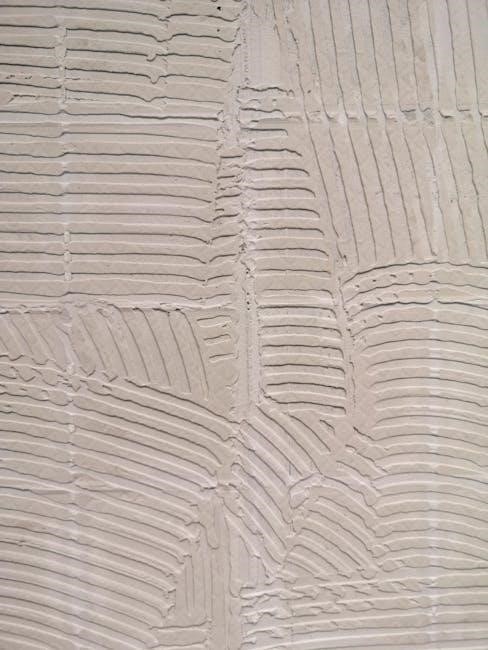
Proper trowel selection is crucial for achieving optimal adhesive coverage and a secure bond with Ultrabond ECO 373. The recommended trowel notch size depends on the specific flooring type and manufacturer’s instructions. Generally, a V-notch or U-notch trowel is preferred for its superior adhesive spread.
For most luxury vinyl tile (LVT) and luxury vinyl plank (LVP) installations, a 5×5/32” or 7×5/32” V-notch trowel is commonly recommended. Vinyl sheet flooring may require a different notch size – consult the flooring manufacturer’s guidelines. Ensure the trowel is clean and in good condition, with undamaged notches.
Maintain a consistent angle and pressure while troweling to create uniform ridges. Avoid skipping areas or applying excessive pressure, which can lead to uneven adhesive distribution. Always test a small area first to verify proper coverage and adhesion.
Coverage Rates: Calculating Adhesive Needs
Accurately calculating adhesive needs is essential to avoid waste and ensure a successful installation with Ultrabond ECO 373. Coverage rates vary based on the application method and flooring type. For typical spray or roller applications with carpet tile and vinyl sheet, expect coverage between 250-350 square feet per gallon.
Trowel application coverage will differ. To calculate the required amount, first determine the total square footage of the installation area. Then, consult the product data sheet for the specific coverage rate associated with your chosen trowel notch size and flooring material.
Always add a 10-15% buffer to account for variations in subfloor porosity, waste, and potential application inconsistencies. It’s better to have slightly more adhesive than to run short mid-project. Remember to factor in any complex room layouts or cuts.
Working Time & Open Time
Ultrabond ECO 373 offers an extended working time, providing installers with increased flexibility. Typically, this adhesive boasts up to 12 hours of working time, allowing for larger installations or more complex layouts without premature adhesive skinning. However, this can be affected by temperature and humidity – higher temperatures may reduce working time.
Open time, the period adhesive remains tacky enough to bond with the flooring, is also substantial. While specific open times depend on environmental conditions, ECO 373 generally provides ample time for proper positioning of flooring materials.
Always refer to the Safety Data Sheet (SDS) for precise details and recommendations. It’s crucial to test a small area to confirm tackiness before proceeding with the full installation, especially in varying environmental conditions. Proper ventilation is also recommended during application.
Flooring Compatibility
Ultrabond ECO 373 excels with LVT, LVP, vinyl enhanced tile, quartz tile, fiberglass-reinforced, and solid vinyl sheet flooring, offering reliable adhesion for diverse materials.
Luxury Vinyl Tile (LVT) Installation
Ultrabond ECO 373 provides exceptional adhesion for Luxury Vinyl Tile (LVT) installations. Ensure the substrate is clean, dry, and properly prepared according to the guidelines in the ‘Preparing for Installation’ section. Apply the adhesive using the recommended trowel – consult the ‘Application Methods: Trowel Selection’ for appropriate notch sizes based on LVT backing.
Maintain a consistent, even spread rate to achieve full coverage. Carefully position the LVT tiles, applying firm, uniform pressure to ensure immediate and complete contact with the adhesive. Utilize a heavy roller, as detailed in ‘Rolling and Securing the Flooring’, to further enhance bonding and eliminate air pockets.
Allow sufficient time for the adhesive to fully cure before subjecting the floor to heavy traffic or furniture placement. Refer to the ‘Working Time & Open Time’ section for specific details. Always consult the LVT manufacturer’s installation guidelines in addition to this guide.
Luxury Vinyl Plank (LVP) Installation
Ultrabond ECO 373 excels in bonding Luxury Vinyl Plank (LVP) flooring, offering a durable and long-lasting installation. Prior to application, verify substrate suitability as outlined in ‘Substrate Requirements & Preparation’. Select the appropriate trowel notch size – refer to ‘Application Methods: Trowel Selection’ – based on the LVP’s backing and manufacturer’s recommendations.
Apply the adhesive evenly, maintaining a wet film thickness that ensures complete coverage without puddling. Carefully lay the LVP planks, ensuring tight seams and consistent alignment. Immediately after placement, use a heavy roller (see ‘Rolling and Securing the Flooring’) to firmly embed the planks into the adhesive, eliminating voids and maximizing contact.
Allow adequate curing time before exposing the floor to heavy loads. Adhere to the ‘Working Time & Open Time’ guidelines for optimal results. Always cross-reference with the LVP manufacturer’s specific installation instructions.
Vinyl Sheet Flooring Installation
Ultrabond ECO 373 provides a robust bond for vinyl sheet flooring, ensuring a seamless and watertight installation. Begin by thoroughly preparing the substrate according to ‘Substrate Requirements & Preparation’, paying close attention to smoothness and cleanliness. Choose the correct trowel notch size, as detailed in ‘Application Methods: Trowel Selection’, based on the vinyl sheet’s backing type.
Apply the adhesive uniformly across the substrate, maintaining consistent coverage. Carefully unroll the vinyl sheet, aligning it precisely with the layout lines. Gently smooth the sheet into the adhesive, working from the center outwards to avoid air pockets. Utilize a heavy roller (‘Rolling and Securing the Flooring’) to firmly bond the sheet, ensuring full contact and eliminating any bubbles.
Allow sufficient time for the adhesive to fully cure before subjecting the floor to regular traffic. Refer to ‘Working Time & Open Time’ for guidance. Always consult the vinyl sheet manufacturer’s installation guidelines for specific recommendations.
Fiberglass-Reinforced Vinyl Sheet Flooring
Ultrabond ECO 373 excels in bonding fiberglass-reinforced vinyl sheet flooring, offering exceptional adhesion and dimensional stability. Prior to application, ensure the substrate meets the requirements outlined in ‘Substrate Requirements & Preparation’, focusing on flatness and dryness. Select the appropriate trowel notch size from ‘Application Methods: Trowel Selection’ – a smaller notch is generally recommended for this flooring type.
Apply a uniform coat of ECO 373, avoiding excessive adhesive that could telegraph through the flooring. Carefully position the sheet, ensuring proper alignment and minimizing overlaps. Employ a firm, consistent rolling pressure (‘Rolling and Securing the Flooring’) to guarantee complete contact between the adhesive and the flooring’s backing.
Fiberglass-reinforced vinyl often requires a longer working time; ECO 373’s extended open time is advantageous. Always refer to both the adhesive’s and the flooring manufacturer’s instructions for optimal results and warranty compliance.
Solid Vinyl Sheet Flooring
Ultrabond ECO 373 provides a robust and reliable bond for solid vinyl sheet flooring installations. As with all resilient flooring, meticulous substrate preparation is crucial – refer to ‘Substrate Requirements & Preparation’ for detailed guidance. Ensure the substrate is smooth, clean, and free of any contaminants. Trowel selection, detailed in ‘Application Methods: Trowel Selection’, is key; consult the flooring manufacturer’s recommendations, but a medium notch trowel is often suitable.
Apply ECO 373 evenly across the substrate, maintaining a wet film. Carefully unroll the vinyl sheet, ensuring proper alignment and avoiding air entrapment. Utilize a heavy roller (‘Rolling and Securing the Flooring’) to firmly embed the flooring into the adhesive, working from the center outwards.
The extended working time of ECO 373 allows for precise positioning of solid vinyl sheet. Always consult the Safety Data Sheet (SDS) for safety precautions during application and cleanup.
Post-Installation Procedures
Following installation, thoroughly roll the flooring for optimal adhesion. Clean up any adhesive residue promptly, referencing the SDS for appropriate solvents and safety measures.
Rolling and Securing the Flooring
Proper rolling is crucial for establishing a strong bond with Ultrabond ECO 373. Immediately after laying the flooring, utilize a 100-lb roller, ensuring complete coverage; For carpet tile and vinyl sheet installations, a rolling schedule of 250-350 sq. ft. is recommended.
This process eliminates air pockets and maximizes adhesive contact. Pay particular attention to the perimeter of the room and around any obstructions. Following rolling, secure the flooring’s edges with appropriate weighting or taping, especially during the initial curing phase. This prevents lifting or movement that could compromise the bond. Allow sufficient time for the adhesive to fully cure before subjecting the floor to heavy traffic or furniture placement – consult the full installation guidelines for specific curing times based on environmental conditions.
Clean-Up and Maintenance
Clean-up of Ultrabond ECO 373 should be performed promptly while the adhesive is still wet. Use a damp cloth or appropriate cleaning solvent recommended by Mapei. Dried adhesive can be more difficult to remove and may require specialized adhesive removers – always test in an inconspicuous area first.
For routine maintenance of floors installed with Ultrabond ECO 373, follow the flooring manufacturer’s guidelines. Generally, regular sweeping, dust mopping, and occasional damp mopping with a pH-neutral cleaner are sufficient. Avoid abrasive cleaners or scouring pads, as these can damage the flooring surface. Refer to the Safety Data Sheet (SDS) for detailed safety precautions during clean-up and handling of the adhesive. Proper maintenance will help preserve the appearance and longevity of your installed floor.
Safety Data Sheet (SDS) Information
Prior to using Ultrabond ECO 373, it is crucial to review the most current Safety Data Sheet (SDS) available from Mapei. The SDS provides comprehensive information regarding potential hazards, safe handling procedures, and emergency measures. Key areas covered include first aid measures for skin or eye contact, inhalation, or ingestion, as well as fire-fighting measures and accidental release procedures.
The SDS details personal protective equipment (PPE) recommendations, such as gloves and eye protection, to minimize exposure. It also outlines proper ventilation requirements during application. Always adhere to the SDS guidelines to ensure a safe working environment. You can find the SDS on Mapei’s website or by contacting their technical services department. Responsible handling and adherence to safety protocols are paramount when working with any adhesive product.
Technical Specifications
Ultrabond ECO 373 boasts 54-60% solids content, an acrylic latex polymer, and a VOC content under 10 g/L, ensuring eco-friendly performance.
VOC Content and Environmental Considerations
Ultrabond ECO 373 is formulated with environmental responsibility in mind. This adhesive exhibits a remarkably low Volatile Organic Compound (VOC) content, consistently measuring under 10 g/L. This characteristic significantly contributes to improved indoor air quality, making it a healthier choice for both installers and building occupants.
The low-VOC formulation aligns with stringent industry standards and green building initiatives, such as LEED (Leadership in Energy and Environmental Design) projects. By selecting ECO 373, professionals can earn valuable points towards these certifications.
MAPEI prioritizes sustainable practices throughout the product lifecycle, from raw material sourcing to manufacturing processes. Refer to the Safety Data Sheet (SDS) available on MAPEI’s website for comprehensive environmental information and compliance details. Choosing Ultrabond ECO 373 demonstrates a commitment to both performance and environmental stewardship.
Physical Properties: Solids Content & Polymer Type
Ultrabond ECO 373 boasts specific physical properties crucial for reliable flooring adhesion. The adhesive’s solids content falls within the range of 54-60%, indicating the proportion of non-volatile components responsible for bonding strength. This balanced formulation ensures both robust tack and sufficient open time for installation adjustments.
The polymer type underpinning ECO 373’s performance is an acrylic latex. This advanced polymer provides exceptional flexibility, contributing to the adhesive’s ability to accommodate substrate movement and maintain a durable bond over time. Acrylic latex also enhances the adhesive’s resistance to temperature fluctuations and moisture.
These properties, combined with its pressure-sensitive nature, deliver a super-aggressive initial tack, quickly securing flooring materials. Detailed technical data, including specific gravity and viscosity, can be found on the product’s Technical Data Sheet (TDS) available on the MAPEI website.
Storage and Shelf Life
Proper storage of Ultrabond ECO 373 is essential to maintain its performance characteristics. Keep containers tightly sealed when not in use to prevent skinning and contamination. Store in a cool, dry, and well-ventilated area, protecting from direct sunlight and freezing temperatures. Ideal storage temperatures range between 50°F (10°C) and 80°F (27°C).
ECO 373, when stored correctly, has a shelf life of up to one year from the date of manufacture in its original, unopened container. Always check the date code on the container before use. While the adhesive may still appear usable after the expiration date, its bonding performance may be compromised.
Avoid stacking containers excessively to prevent damage. Refer to the Safety Data Sheet (SDS) for comprehensive handling and storage guidelines. Discard any material that shows signs of significant viscosity changes, skinning, or contamination.
Troubleshooting Common Issues
Adhesive Failure: If flooring lifts, ensure proper substrate preparation, including moisture testing and cleanliness. Verify adhesive coverage rates were followed. Insufficient working time or improper rolling can also contribute.
Slow Tack Development: Low humidity or cooler temperatures can slow tack. Increase ventilation or slightly warm the adhesive (do not exceed recommended temperatures). Ensure the adhesive isn’t expired.
Skinning in Container: This indicates exposure to air. While usable, carefully remove the skin and thoroughly mix the adhesive before application. Prevent future skinning by tightly sealing the container.
Residue on Flooring: Use Mapei’s recommended adhesive remover for safe and effective cleanup. Always test in an inconspicuous area first. Consult the SDS for specific cleaner recommendations.
For persistent issues, contact Mapei Technical Services for expert assistance and guidance. Always refer to the full product data sheet for detailed troubleshooting information.